Tuesday, November 6, 2018

The Russians Are Coming! The Russians Are Coming! . . . To Indianapolis!

If you watch the mainstream media and listen to one of our major political parties, you know that America is crawling with Russians, especially on this day when we choose our elected leaders--completely under their influence of course. Russian influence that is. Well, in the good old days of the Cold War when the aforementioned political party felt more kindly towards them, Russians came to Indianapolis. And they were armed. But not with rifles and bazookas. Instead they used pens, for they were cartoonists.

Yes, sixty years ago, in May 1958, while the Indianapolis 500-Mile Race was going on, the city was invaded by two Russian cartoonists, Vitalii Goriaev (1910-1982) and Ivan Semeonov, who worked in their native country for the humor magazine Krokodil. They came at the invitation of journalists, Jameson G. Campaigne, editorial page director of the Indianapolis Star, and Pulitzer Prize-winning cartoonist Charles G. Werner of the same paper. Their visit would coincide not only with the Indianapolis 500 but also with the national convention of the American Association of Editorial Cartoonists (AAEC). Indianapolis was supposed to have been a closed city to visitors from Russia, but the U.S. Department of State consented to Campaigne's request and allowed them in. No one suspected that the Russians would escape from their keepers and make a trip to the big city. Not Indianapolis, though. New York. That big city.

Goriaev and Semeonov arrived in New York towards the end of May 1958. Horrified by traffic but excited by the movement and "holiday mood" of the city, they drew pictures of skyscrapers, art galleries, pigeons, children, American women, and big American cars. As the date of the 500 approached, the two made their way west, to Indianapolis, where, on the evening of Thursday, May 29, they attended a reception and banquet at the Continental Hotel, hosted by Eugene Pulliam, publisher of the Indianapolis Star. On hand were forty-four other cartoonists, including Hoosier cartoonists Karl Kae Knecht of the Evansville Courier, William B. "Robbie" Robinson of the Indianapolis News, Eldon Pletcher of the Sioux City, Iowa, Journal-Tribune, Bill Crawford of the Newark News, Eugene Craig of the Columbus Dispatch, Cy Hungerford of the Pittsburgh Post-Gazette, and Charles Werner of the Indianapolis Star.

The big day came on Friday, May 30, when the cartoonists were in the stands for the running of the race. The beginning of the race was marred by a terrible crash in which driver Pat O'Connor was killed. Goriaev made a sketch of his fellow spectators hours later as the moment of victory came for Jimmy Bryan. His sketch appeared in the Indianapolis News the next day (see below). I'm pretty sure Russians didn't influence the outcome of the race, though.

The convention of the AAEC came to a close on Sunday, May 31. Goriaev, Semeonov, and their translator, Lev Petrov, were supposed to have continued westward, to Hannibal, Missouri, then to Disneyland, before making a return trip east to Boston. Instead the Russians went on the lam, escaping back to New York City, where they made a study of art and cartooning before being found again on June 6. There didn't seem to be any harm done, though, and the men stayed in the city until June 13.

Life noticed that Vitalii Goriaev and Ivan Semeonov had come to America. In its issue of June 16, 1958, the magazine featured a two-page spread of the artists' drawings. Back home again, Goriaev had his work, done in fiber-tipped pen and watercolor, exhibited at Tret'iakov Gallery in Moscow in 1958. He called it "Americans at Home." For twenty days in the late spring of 1958, he had had a chance to observe us in our natural environment and to taste in the Circle City what the Indianapolis News called "Hoosier freedom." I wonder if he also questioned, as the News suggested he might, his role as a cartoonist in the Soviet Union.

Happy Election Day, America!

From the Indianapolis News, May 31, 1958.

From Life, June 16, 1958.

Text copyright 2018, 2024 Terence E. Hanley

Tuesday, October 30, 2018

Happy Halloween from Clifford and Friends!

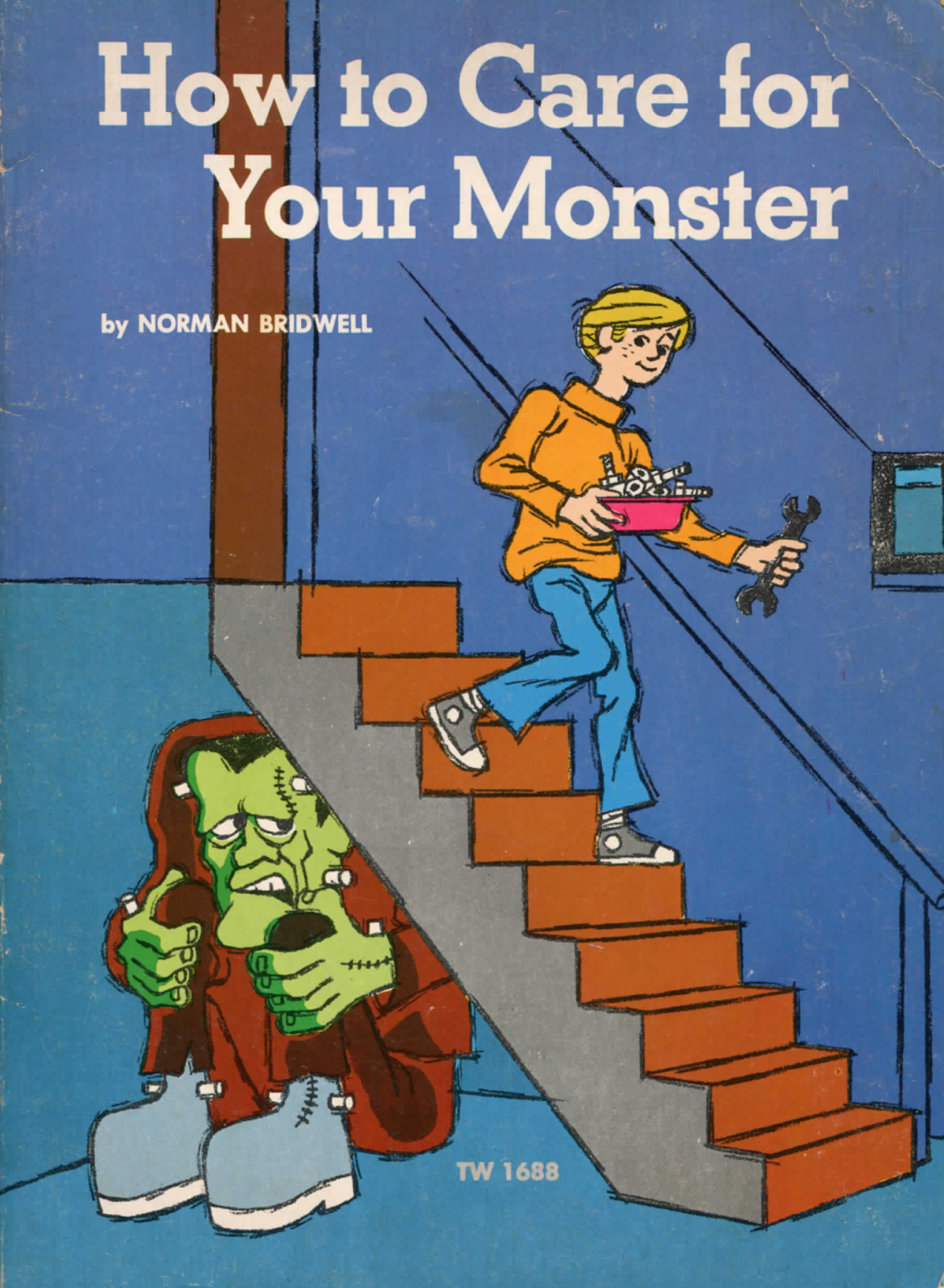
If you remember Clifford the Big Red Dog from childhood, then you remember the work of a Hoosier cartoonist and illustrator. His name was Norman Bridwell, and he was born on February 15, 1928, in Kokomo, Indiana. Bridwell graduated from high school in Kokomo and studied at the Herron School of Art in Indianapolis. Clifford the Big Red Dog sprang from his imagination in the early 1960s and found his way into the first of dozens of children's books in 1963. Clifford has also been on television and in all kinds of merchandise. There may one day be a Clifford movie, too.

In addition to creating the Clifford series, Bridwell wrote and drew a series of books, also for Scholastic, about the Witch Next Door. And he was the author of at least three books haunted by monsters. So, from Indiana Illustrators and Hoosier Cartoonists to readers everywhere,

Happy Halloween!


Text copyright 2018, 2024 Terence E. Hanley

Tuesday, October 23, 2018

Florence Sarah Winship (1900-1987)

Florence Sarah Winship was born on October 28, 1900, in Elkhart, Indiana, to William H. and Louie M. Winship. In 1910 and 1920, she was enumerated in the U.S. census with her family in Elkhart. By 1922, she was in Chicago, the city in which she would live and work for the next two or three decades. Chicago was also the city in which Florence received her art education. As so many Indiana artists have done, especially artists from the northern part of the state, she studied at the Chicago Academy of Fine Arts and the Art Institute of Chicago. In 1922, she traveled to Havana, Cuba. In 1925, she went on a longer trip to France. She returned to the United States on the luxury ocean liner S.S. Paris.

Florence S. Winship moved into the new Palmolive Building in Chicago in 1929. There she kept an art studio while living in the Park Dearborn Apartments with her older sister Katherine L. Winship. I have found a Florence S. Winship in the 1940 U.S. census, in Chicago and working as the operator of a beauty shop. I can't say whether that Florence S. Winship was our artist, but in the 1940s, her career as an illustrator of children's books and coloring book covers began to take off. Her name appeared in a city directory of Elkhart in 1955. She was then listed as an artist. Even so, she kept open her connections to people and places in Chicago. She also did programs at libraries and in front of women's groups in and around that city. These were travelogs and films about animals and nature, some or all of which she shot herself. Of special note is a film called "Come Into My Garden," shot in Florence's own garden in Deerfield, Illinois, and featuring the monarch butterflies for which she grew milkweed and provided habitat over the years.

The books illustrated by Florence Sarah Winship are too many to list here. I'm not sure that anyone could easily come up with a complete or even near complete count. In any case, she worked for many years as a freelance artist for Western Printing and Lithographing Company of Racine, Wisconsin. Her rise in that field seems to have coincided with a decision by Western in the early 1940s to print a series of colorful, durable, and affordable children's books. These were the now classic and near ubiquitous Little Golden Books. Other series issued by Golden Press and Whitman followed, among them Cozy-Corner Books, Tell-a-Tale Books, Top Top Tales Books, Golden Cloth Books, and Golden Shape Books with their distinctive die-cut shapes. Florence specialized in stories about children, animals--especially cats, dogs, and horses--Christmas, ABCs, and counting. She also did covers for Whitman coloring books. Fortunately for us, she signed her works, and so we can find them pretty easily today, more than thirty years after her death.

Florence S. Winship had a long career as an artist on books for children. She died in March 1987 at age eighty-six.


I'll close with the book by which I discovered Florence Sarah Winship, Circus Color-By-Number, from 1966. That's her artwork on the cover. The interior illustrations were by Becky and Evans Krehbiel.

Text copyright 2018, 2024 Terence E. Hanley

Monday, October 1, 2018

Franklin Booth on the Cover of Life

The covers of the old Life magazine weren't always comical, humorous, or satirical. Sometimes, as in those shown below, done by Indiana illustrator Franklin Booth, they were serious, adventurous, and romantic. Born on a farm in Indiana, Booth (1874-1948) seems to have been an artist with his head in the clouds, and he often drew and painted clouds--great, mountainous, billowing clouds, like landscapes in the air. Whether he was drawing works of Nature, such as towering trees like columns in a cathedral, or of man, such as skyscrapers or great spires and domes, all also reached for the clouds, or as every artist attempts, to heaven.

Life, an adventure issue, from October 20, 1921, with a cover by the unmatchable Franklin Booth.

Life, subtitled "Air Castles," from January 12, 1922, again with a cover by Booth, and including an element not always seen in his work: a human form.

Text copyright 2018, 2024 Terence E. Hanley

Sunday, September 30, 2018

Indiana Illustrators in Puck and Life

More than a couple of Indiana illustrators did work for Puck, Judge, and the old Life humor magazines. Two of the earliest and most well known were Albert Levering (1869-1929) of Hope, Indiana, and Walter H. Gallaway (1870-1911) of Pendleton and Indianapolis. Following is some of their art.

Life, Auto Number, January 19, 1905, with cover art by Albert Levering. In addition to being an illustrator, Levering was a cartoonist. His training as an architect showed through in his precision and complete confidence in depicting buildings and machinery.

Levering may not have been right on the timing or appearance of the vehicles shown here, but he foresaw that horses would one day become pets rather than beasts of burden. Note the lap-horse held by the woman on the right. It probably won't be long before miniature horses are called "therapy animals" or "service animals" and that you'll find them sitting next to you on the plane.

Levering's cartoon portrait of Mark Twain, here used as the cover of a color insert in Life, July 13, 1905, became one of his more well-known works.

In the early 1900s, caricaturists often depicted well-known men as having big heads and little bodies. Here, with William Howard Taft, Levering did the opposite. The result is funny, though not very flattering to our heaviest of presidents.

You don't have to know who William Waldorf Astor was to gain some insight into his personality and character by way of Albert Levering's very devastating caricature from Life, 1905. 

One hundred years ago this season, Kaiser Wilhelm II of Germany was in a bit of a pickle. His country was losing its war and he was only a few months away from abdicating his throne and fleeing to Holland. In 1905, Albert Levering caricatured him for Life, and though this portrait isn't as devastating as the one above of Astor, the artist nevertheless had his fun. Note "der Kaiser's" own self-portrait and book of poems. Note also the little cannon, which became a very big howitzer--Big Bertha--just a few years after this drawing was made. The Kaiser is just another example of how personal and psychological failings on a very individual level can have outsized effects on history and the rest of humanity. We are today still paying the price for those kinds of failings, one hundred years after the end of the Great War. 

Albert Levering was most active during the Progressive Era when trusts were seen as a great enemy and trust-busting was a favorite activity among politicians. Trusts, here disguised as corpulent girls (they're probably supposed to be caricatures of a real-life person but I don't know who that might have been) dance around a man (is he supposed to represent the public?) in a drawing captioned "A Maypolitical Party" (a somewhat clumsy pun on "Maypole Party"). The month for this issue of Puck is obvious, but I can't read the year. Sorry for the poor image. What we need, I think, is a complete and easily accessible, searchable, portable, and necessarily digital version of Puck for all to see.

Walt Gallaway did at least two covers for Puck, this one from June 26, 1901 . . .

And this one, from September 13, 1903. Note the very Hoosier-looking men with big bellies, big, unkempt beards, slouch hats, big boots, and baggy pants.

Text copyright 2018, 2024 Terence E. Hanley

Saturday, September 15, 2018

More Comic Magazine Covers

I have more comic magazine covers for you, beginning with John T. McCutcheon's drawing for the first issue of Liberty. Known later in life as the dean of American editorial cartoonists, McCutcheon (1870-1949) worked for Colonel Robert R. McCormick at the Chicago Tribune. He was no doubt called upon to lend his considerable popularity to the first issue of Colonel McCormick's new magazine. McCutcheon's cover drawing seems to have been intended to evoke memories of his famous "Mysterious Stranger" cartoon from 1904 (below).

Next are two more covers for Judge by Don Herold (1889-1966) of Bloomfield, Indiana. Finally, two covers by Warsaw, Indiana, native Don Ulsh (1895-1969) for the humor magazine It's a Lu-Lu or Lu Lu, from the 1930s.

Next: A few covers from the other great humor magazines, Puck and Life.

Liberty, May 10, 1924, with a cover--an infinity cover no less--by John T. McCutcheon, originally of South Raub, Indiana.

McCutcheon's cartoon "The Mysterious Stranger" appeared in the Chicago Tribune in November 1904, after an election in which Missouri, here represented by a Mark Twain-like figure, went Republican for the first time since 1868. There are echoes of McCutcheon's cartoon in his cover drawing from twenty years later.

Judge, Chicago Number, October 9, 1926, with a hilarious cover drawing by Don Herold.

Judge, April 21, 1928, again with a cover drawing by Herold. This reminds me of the work of cartoonists from later decades, including Abner Dean (1910-1982). People may have forgotten Don Herold. At this late date, his influence upon other cartoonists may be vastly underestimated.

Don Ulsh drew this cover for the first issue of It's a Lu-Lu. Ulsh, a minimalist, taught and advised generations of young cartoonists until his death in 1969.

By the third issue, It's a Lu-Lu had become merely Lu Lu. Don Ulsh was the cover artist again. Note the passing resemblance of his signature to that of Don Herold.

Text copyright 2018, 2024 Terence E. Hanley

Saturday, September 1, 2018

Hoosier Cartoonists on the Cover of Judge

The Sunday newspaper comic section in America has its origins, as so much of our popular culture does, in the late nineteenth century. The Sunday comics are of course in color, and they got their start as inexpensive competitors to (and imitators of) the color comic weeklies, first of which was Puck, founded in 1876 by Austrian-born artist Joseph Keppler (1838-1894).  (1) After Puck came The Judge in 1881, then Life, in 1883, the latter made famous by Charles Dana Gibson (1867-1944), creator of the Gibson Girl.

Puck, The Judge, and Life benefitted from innovations in printing technology, as well as from improved methods of mass production and mass transportation in the late 1800s. Newspaper printing lagged by comparison, but in 1892, the Chicago Inter Ocean became the first paper to print a color supplement. The Sunday comic supplement--what became the Sunday comic section and ultimately just the Sunday comics--soon became a feature of big-city papers in New York and Chicago. By the early or mid 1900s, even smaller papers had full-color Sunday comics, although they often outsourced the printing to companies in St. Louis, Buffalo, etc.

Although Puck ceased publication in 1918, its covers and especially its double-sized center spreads are still with us. If you look hard enough, you'll find them at antique stores and malls, as well as on line, usually at reasonable prices. The old Life magazine, on the other hand, has been largely forgotten. If you mention Life, most people think of the photojournalistic version of 1936-2000. Copies of the old Life may be hard to come by.

The Judge, usually just called Judge, is probably the least well known of the three, having come to an end in 1947, beyond living memory for most people of today. In its day, though, the magazine featured covers by Rea Irvin (1881-1972), John Held, Jr. (1889-1958), and Dr. Seuss (1904-1991), among many other luminaries of the popular arts in America. 

Hoosiers had their place on the cover of Judge as well, chiefly Don Herold (1889-1966) of Bloomfield. Below are a few of his covers, plus a bonus cover by Nate Collier (1883-1961), who, though he didn't enjoy the good fortune of having been born in Indiana, studied cartooning by correspondence with the National School of Illustrating of Indianapolis and worked as a cartoonist for the Kokomo Dispatch in the early 1900s.

Note
(1) Although I have not found any direct record of Joseph Keppler's sojourn in Indianapolis in the late 1860s to about 1870, I have an article that says that he indeed lived in that city before moving on to St. Louis. By the way, Keppler should not be confused with the artist Max Francis Klepper (1861-1907), as has happened so often.

Judge, the Etiquette Number from November 28, 1925, with a cover by Don Herold.

Judge, February 27, 1926, again with a cover by Herold.

Judge, April 24, 1926, with a cover by Don Herold and "T.S."

Judge, Younger Set Number, July 17, 1926. Don Herold was once again the artist. His theme (and pun): "How to Rear a Daughter." You might think that no one has ever looked like a Don Herold cartoon. In fact, many of his male figures were more or less self-portraits. By the way, Herold's daughter was Doris Herold Lund (1919-2003), author of the book Eric (1974). Herold is also the originator of the quote, "Actresses happen even in the best families."

Judge, Red Number, date unknown, with a cover by Don Herold. 

Finally, Judge, The Great Melodrama Number, January 28, 1928, with a cover drawing by Nate Collier.

Text copyright 2018, 2024 Terence E. Hanley