Friday, December 6, 2024

Jingle Bells by George Peed (1913-2002)

George Peed (1913-2002) of Grandview, Indiana, was an artist known by almost every child in America, though not by name, for he created scores of record album covers for Peter Pan Records of New Jersey. Among his many designs were those he created for holiday-themed records, especially Christmas records. Below is the cover for Jingle Bells (1039), a 45-rpm record containing four songs.


Merry Christmas

from Indiana Illustrators

&

Hoosier Cartoonists!

Text copyright 2024 Terence E. Hanley

Tuesday, November 5, 2024

Cartoon Lessons by Charles Kuhn (1892-1989)

Though born in Illinois, cartoonist Charles "Doc" Kuhn lived and worked in Indiana for many decades. Kuhn was an editorial cartoonist at the Indianapolis News from 1922 to 1948. In middle age, he decided to make a change in his cartooning career, launching Grandma, a syndicated comic strip, on April 14, 1947. Originally syndicated by Richardson Feature Service of Indianapolis, Grandma was picked up by King Features Syndicate the following year and ran in American newspapers until 1969. Kuhn lived with his wife in Acton, Indiana, just southeast of Indianapolis, until 1964, when they moved to Florida. Kuhn died on January 16, 1989, at age ninety-six.

Like so many early cartoonists, Kuhn was a jack-of-all-trades. In addition to drawing editorial cartoons and a nationally syndicated comic strip, he created instructional books on cartooning for children. These included The Boy and Girl Cartoonist: A Complete Course in Cartooning, published by Saalfield Publishing Company of Akron, Ohio, in 1936. The cartoons below are from that book.

Charles Kuhn's Lessons 57 and 58 from The Boy and Girl Cartoonist (1936), showing the stereotyped Republican elephant and Democratic donkey. They look very different here of course . . .

Now see if you can guess which one has his big, fat hand out to the taxpayer. Look closely. Can you tell the difference? Neither can I. And these are the people we're going to elect today and then install in office in a few short weeks.

Text copyright 2024 Terence E. Hanley

Monday, September 9, 2024

John Gannam Illustrating Mrs. Miniver

Illustrator John Gannam (1905-1965) was born in Lebanon but came to the United States with his parents in 1909. As a child he lived in Indianapolis. He received his art education in Chicago and worked in commercial art in Detroit and New York. Here is an illustration for Mrs. Miniver by Jan Struther (1940), taking the form of a piece of commercial art advertising the Air Transport Association of Washington, D.C. The image is from National Geographic, February 1944, now eighty and a half years in the past.

Text copyright 2024 Terence E. Hanley

Monday, June 10, 2024

The Sound of Music Album Cover by George Peed (1913-2002)

Indiana artist George Peed (1913-2002) created scores of record album covers for Peter Pan Records, based in his adopted home state of New Jersey. Below is his charming cover art for Rodgers and Hammerstein's Broadway musical The Sound of Music (8163), with music by the Peter Pan Orchestra and vocals by Janet Anderson and Marian Garvey. This image is imperfect: I have stitched it together from two scans and have left off the very edges of the design.

Text copyright 2024 Terence E. Hanley

Saturday, May 25, 2024

A Springtime Picture by William Merritt Chase (1849-1916)

William Merritt Chase was born on November 1, 1849, in Williamsburg, Indiana, to merchant David Chase and Sarah Swaim Chase. In 1861, the Chase family moved to Indianapolis, where he studied art under Barton S. Hays. In 1869, he left Indiana for New York City, and in 1872, the young artist embarked for studies at the Royal Academy in Munich. Chase remained in Europe for several years, living, studying, and painting in Venice in 1876-1877 with Frank Duveneck and John Twachtman. In 1878, he returned to New York to teach at the newly established Art Students League. Artist Charles Henry Miller wrote: "Mr. Chase upon returning to New York virtually took the town by storm, capturing its chief artistic citadel [. . .] the exhibition gallery of the Tenth Street Studio Building [. . .]." (Quoted in William Merritt Chase, 1849-1916 by Ronald G. Pisano, 1983, p. 42.) For the next nearly four decades, Chase lived, taught, painted, and advanced the cause of fine art in America, exhibiting in his many wonderfully good portraits, still-life paintings, and landscapes his bravura with brush and chalk. Some of his impressionistic paintings are really quite astonishing in their technique.

William Merritt Chase died on October 25, 1916, in New York City. He and Hoosier poet James Whitcomb Riley were exact contemporaries, having been born in and died in the same years. Whereas most of Riley's poems have not aged well, Chase's paintings live on as the imperishable works of a great artist. Below is one example, "The Nursery" from 1890, a fine picture for this beautiful spring season.

For my parents' wedding anniversary.

Text copyright 2024 Terence E. Hanley

Sunday, May 12, 2024

Larry Blake (1952-2024)

Following is a tribute that I wrote for Larry Blake for the day and place of his graveside service, Saturday, April 20, 2024, Eden Cemetery, Reedsville, Ohio:

Larry Perrin Blake was born on October 18, 1952, in Greenfield, Ohio. His parents were Ervan Vinson Blake (1923-1975), a U.S. Army veteran of World War II, car mechanic, used car salesman, and operator of a taxi service, and (Edith) Lavonne Perrin Blake (1926-2007), a wife, mother, and homemaker. She was an artist, too. Larry grew up in Greenfield and Springfield, Ohio. He studied commercial art at Springfield-Clark County Joint Vocational School and graduated from Springfield High School in 1970. As an art student, he met Larry Nibert, who became a lifelong friend and collaborator.

Everyone who knew Larry knows that he was a talented, imaginative, and very creative artist. He began drawing comics in 1960 and first saw his work in print in 1973. From then until the end of his life, except when he was in ill health, Larry drew and drew, always with great energy and enthusiasm. He loved drawing comic books, but Larry was also a gag cartoonist, illustrator, and muralist, and he made many colorful and evocative paper collages. Over the years, he knew and collaborated with many other artists and writers who were and are involved in small press, amateur press, and alternative comics, including Jim Pack, Jim Main, Tim Corrigan, Mike Gustovich, Steve Keeter, Doug Phillips, Larry Johnson, Russ Ferryman, Gerry Lee, and Dale Sherman, among many, many others. In later years, Larry worked with Kevin Yong, Eric Jansen, Tom Ahearn, Gary Gibeaut, Jason Gibeaut, and Terence Hanley.

Larry attended comic book conventions and other pop-culture conventions beginning in the 1970s. In the 2000s, he was a regular at the Mothman Festival in Point Pleasant, West Virginia, and other events close to his home in Reedsville, Ohio. In 2009, Larry received a lifetime achievement award at the Small Press and Alternative Comics Expo (S.P.A.C.E.), an event put on every year in Columbus, Ohio, by Bob Corby, also a longtime friend.

Larry was a great fan of rock 'n' roll music. Like the rest of America, he watched the Beatles on The Ed Sullivan Show in February 1964, but it was the Monkees television series in 1966-1968 that turned him into what he called "a foaming-at-the-mouth rock 'n' roll fanatic!" He began collecting records, magazines, and memorabilia about his favorite kind of music and his favorite bands. During the 1970s, he attended lots of rock concerts. If you wanted to find Larry at a convention or other event, you just had to follow the sound of the music.

In addition to the Beatles and the Monkees, Larry was a fan of Alice Cooper, the Ramones, and KISS. For years he had artwork in fan magazines such as KISS Crazy, and he learned to draw flawlessly and from memory the members of that band, as well as the Ramones. Larry knew everything there is to know about rock music--all of the bands, band members, singers, songwriters, and songs. He also knew all about television shows and old movies. "I loved going to drive-in movies with my family," he remembered. "We'd pile in the car with a grocery bag fill of bread, lunch meat, chips, bottles of soda pop! Great fun." Family meant a lot to Larry. In addition to his younger sister Rita, he had many cousins with whom he played and pretended when they were children.

The comic book titles on which Larry worked is long and varied. I'm not sure that there will ever be a complete catalog of his more than half-century's worth of work. Titles on which he worked or that he created himself include: Afterworld, Alpha-Omega, The Big Book of Christian Comics, Christianman, Comet Tales, Ditkomania, Facets (Harrison Ford fanzine), Fandom Teamup, Fanzine '77, Five Star Comics, Followers of the All, KISS Crazy, Mothman 'Toons, New Sons of Thunder, Skeet's Fab Forum and Review, Reeealy Comics Presents . . ., Rotgut Funnies, Silver Wolf, Spectrum, Tim Corrigan's Comics and Stories, and Zero Man. Larry also created a long-running comic book series called Kevin Kool, based on his own friends and experiences from high school and after. He began drawing Kevin Kool in 1966, the same year in which he discovered the Monkees.

Larry's most ambitious work--really his life's work, a sprawling and ambitious epic--is Psychozort, an anthology of his own characters and stories that ran for dozens of issues from the 1970s until the early 2000s. Larry first started working on the characters that would one day fill the pages of Psychozort when he was just eight years old. Like much of Larry's work, stories in Psychozort were based on his own life, its characters based on people he really knew. Paul Burden, sidekick of super heroine Nightstar, is Larry himself, while Nightstar was based on a young friend. The fact that Larry's characters were based on real people made them and their stories more authentic, interesting, and compelling. The story of Nightstar and Paul Burden will never be finished. Maybe that's just as well. As in John Keats' poem, addressed to the ageless figures on a Grecian urn, "For ever wilt thou love, and she be fair!"

Larry was close to his paternal grandparents, Reverend Eldon Blake and Harriet "Hattie" Blake. "Grandpa was an amazing guy," Larry wrote, while his grandmother encouraged him to draw. "I'd give her drawings," Larry remembered, "and she'd keep them in a dresser drawer in her bedroom." Larry and his family visited with his grandparents a lot when he was a kid. In 1983, after a bout with serious illness, Larry returned to the Reedsville area and his mother's Meigs County home. He lived there for more than three decades after that, just down the road from his friends Dee and Jeff Kimes. In 2018, Larry moved to Boonville, Indiana, at the invitation of his friend Kim Hemmerlein. She and her son Gary became a home-away-from-home family for him, and it was Kim who helped look after Larry and took care of his affairs at the end. Larry spent the last years of his life in Boonville and passed away there on March 28, 2024, meaningfully, I think, during Holy Week and just three days before Easter Sunday. He was seventy-one years old.

Larry was smart and funny and generous. He was a talented and extremely prolific artist, his body of work numbering in the thousands of pages. What he wanted was for his art to survive him and for people to go on seeing it for a long time after he was gone. We will miss Larry, and though he might be departed now, his art remains. He remains in our memories, too, as a happy, cheerful, laughing, and funny guy. Larry was a Christian. In his last letter to me, he wrote, "PSYCH [his comic book Psychozort] is the ONLY reason I still wanta BE here! Actually what comes NEXT sounds much more interesting! A new body, reunions with all who went on before & the full-time ALL enveloping presence of GOD who is love!" We can take comfort knowing that Larry is in that presence now. Meanwhile, as they say in the comic books, we go on here.

Quotations are from an interview Larry did with D. Blake Werts, published in his mini-comic Copy This! #32, October 2016. Thank you, Blake. All other text is copyright 2024 Terence E. Hanley.

The final panel in Larry Blake's first story of Nightstar, published in the initial issue of Psychozort, 1998. Everyone who knew Larry recognizes the male figure here as the artist himself. Note that Larry's autobiographical character is wearing a Rez t-shirt. Music from that band played at his graveside service. So, again, if you followed the music, you would find Larry.

Monday, March 11, 2024

Mad Anthony Wayne by Ursula Koering (1921-1976)

Ursula Koering (1921-1976) illustrated children's books as well as articles and stories in children's magazines. She was associated for many years with Golden Press and the Western Publishing Company. Today I found a magazine with three of her illustrations. The magazine is The Golden Magazine for Boys and Girls. Her illustrations are in a historical article called "Anthony Wayne's Cattle Drive" (Part III) by Martha Brown. The date was March 1968, fifty-six years ago as I write. The culminating event in Martha Brown's article is the attack by Anthony Wayne and Casimir Pulaski on the British at Haddonfield, New Jersey, on March 1, 1778, one hundred forty-six years ago this month.

Here are Ursula Koering's three illustrations:


Original text copyright 2024 Terence E. Hanley

Thursday, January 4, 2024

Hoosier Cartoonist Larry Blake Needs Help

My friend Larry Blake is a cartoonist and comic book artist who has been at work in his chosen field for more than half a century. He has drawn every kind of comic book character, from Little Lulu to his own superheroes such as Missile, Nightstar, and Kevin Kool. He is also a great fan of rock 'n' roll and pop music. His favorites include The Ramones, KISSAlice Cooper, and John Lennon. For years he attended small press and comic book conventions. He has collaborated with lots of other artists, including Tim Corrigan (1950-2015) with whom he created a weekly newspaper comic strip called Allegheny Man. Those involved in small press and alternative comics will remember Tim as the publisher of a journal called Small Press Comics Explosion and a supporter of and mentor to countless cartoonists. It was through Larry that I met Tim at the Small Press and Alternative Comics Expo (S.P.A.C.E.) in Columbus, Ohio.

Larry Blake's health problems began many years ago. Things improved for him after he moved from Ohio to Indiana and to a better situation. Now Larry is down again and needs help. Bob Corby of Columbus has set up a GoFundMe page for Larry. You can access it at the following URL and link:

https://www.gofundme.com/f/larry-blake

You can read and see videos about Larry on the Internet. You can also purchase his books, which include:

  • The New Sons of Thunder.

I don't ordinarily provide links to commercial websites on this blog, but for this I'm making an exception.

Thanks for reading.

Copyright 2024 Terence E. Hanley

Wednesday, December 28, 2022

Jane Arden and the Vanished Princess

In 2021, with the coronavirus still haunting people's thoughts, I went to just one very small comic book convention, I think. It actually happened in the driveway and garage of a comic book dealer and college professor. I bought only a few things, but I wanted to show this little treasure, a Better Little Book called Jane Arden and the Vanished Princess by Monte Barrett and Russell Ross (1938). It appears here at about original size.


The writer, Monte Barrett, was Percy Montgomery Barrett. Born on June 19, 1897, in Mitchell, Indiana, he was a journalist and novelist with historical novels and mysteries to his credit. He died on October 8, 1949, in New York City.

Jane Arden began in the comics on November 26, 1928. Frank Ellis was the original artist, but he was replaced by Russell E. Ross in 1933. Ross continued with the strip for twenty years. After appearing in movies and comic books, as well as having her own radio drama, Jane reached her end in 1968. This Better Little Book was just another one of her multimedia appearances--a word that of course didn't exist at the time.

Text copyright 2022, 2024 Terence E. Hanley

Monday, December 26, 2022

Buffleheads by J.N. "Ding" Darling

The bufflehead is one of my favorite species of duck. I wrote about buffleheads in 2019 and showed a piece of art by Mac Heaton (1925-2002), a wildlife artist who worked for a long time with the Indiana Department of Conservation. You can see that picture by clicking here. Now I have another picture of buffleheads, this one by Jay Norwood "Ding" Darling (1876-1962). (Those are ruddy ducks on the right.) Although he was better known as a political and editorial cartoonist, Darling was also a conservationist and wildlife artist. The J. N. "Ding" Darling National Wildlife Refuge on Sanibel Island, Florida, is named in his honor. The illustration below is from a full-page feature called "Don't Shoot These Ducks! Uncle Sam's Laws Protect Them," from the Sunday Des Moines Register, November 1, 1936.

Darling was born in Norwood, Michigan. His very slim connection to Indiana was by way of living in the Hoosier State for a brief time when he was young.

Text copyright 2022, 2024 Terence E. Hanley

Sunday, December 25, 2022

His First Christmas by Worth Brehm (1883-1928)

"His First Christmas," a piece of advertising art by Indiana illustrator Worth Brehm (1883-1928). If you look closely, you will see Raggedy Ann and Andy, created by another Indiana artist, Johnny Gruelle (1880-1938), peaking out from under the Christmas tree.

Merry Christmas from Indiana Illustrators &

Hoosier Cartoonists!

Text copyright 2022, 2024 Terence E. Hanley

Saturday, December 24, 2022

Abe Martin in Verse

Last time I showed a poem about the Toonerville Trolley That Meets All Trains. This time I have a poem about Abe Martin, another cartoon creation by another adopted Hoosier, Kin Hubbard (1868-1930), originally of Bellefontaine, Ohio, later of Indianapolis and Brown County, Indiana. The poem is "Abe Martin," composed by James Whitcomb Riley (1949-1916) of Greenfield, Indiana, and illustrated by Will Vawter (1871-1941), yet another transplant to the Hoosier State. (He was born in West Virginia.) The images below are from Riley Songs of Friendship (1915).


Original text copyright 2022, 2024 Terence E. Hanley

Thursday, December 22, 2022

Toonerville Trolley in Verse

"Toonerville Folks," also called "The Toonerville Trolley" or "The Toonerville Trolley That Meets All Trains," was a one-of-a-kind feature and one of the greatest of American newspaper comics, from their inception in the nineteenth century until today. Drawn by Fontaine Fox (1884-1964), it was read and loved by millions from early in its run until reaching the end of the line in 1955. Born near Louisville, Kentucky, Fox matriculated at Indiana University, and though he didn't complete his degree, Fox's vast collection is now at Lilly Library in Bloomington.

As a measure of the high regard in which Fox and his very funny and enduring creations were held, Don Marquis (1888-1937) composed a poem called "The Toonerville Trolley" and dedicated it to Fontaine Fox. From Cartoons Magazine, October 1916 (page 634):


Don Marquis had his own Indiana connection: he was married to actress and Indianapolis native Marjorie Vonnegut (1892-1936).

Original text copyright 2022, 2024 Terence E. Hanley

Tuesday, December 20, 2022

Harry A. Davis, Jr., in Traces Magazine

Harry Allen Davis, Jr., was a Hoosier artist. Born in Hillsboro, Indiana, on May 21, 1914, he grew up in Brownsburg and studied at Herron School of Art in Indianapolis. He received his bachelor of fine arts in 1938 and studied in Rome in 1938-1940. In 1942, Davis joined the U.S. Army and returned to Italy where he soon became a combat artist. He taught at Herron after the war, retiring in 1983. Davis was married to another artist, Lois Peterson. He died on February 9, 2006, at age ninety-one.

Early this year, Traces of Indiana and Midwestern History, the magazine of the Indiana Historical Society, featured Davis in a cover story entitled "Soldier and Artist: Harry A. Davis Jr. at War." The author is Ray E. Boomhower, editor of the magazine. You can read about Davis and see many of his paintings and drawings in the Winter 2022 issue of Traces.


Text copyright 2022, 2024 Terence E. Hanley

Sunday, December 18, 2022

Gray Morrow in Funky Winkerbean

It isn't often that a Hoosier cartoonist is named in a present-day newspaper comic strip, but that happened this summer. Read on . . .

The first comic strip about comic strips was probably Sam's Strip by Mort Walker and Jerry Dumas, syndicated in the nation's newspapers from 1961 to 1963. They didn't have fancy words back then. Now we call them metacomics--comics about comics. Metacomics have become increasingly common. It's rare now that a week or a month goes by in the comics in which there isn't a reference made in a comic strip to another comic strip.

The comic strip Funky Winkerbean has been around for a long time. An Ohioan named Tom Batiuk puts his name to the strip, but I have a feeling that at least some of the continuities are the work of a ghostwriter. And I have a feeling that I talked to that ghostwriter one day on the mezzanine of a hotel in Columbus, Ohio.

A long time ago, I was a regular reader of Funky Winkerbean. That's when it was about high school students. At some point it made a giant leap into the present. Now those students are old. One of the characters in the current Funky Winkerbean is a cartoonist. This summer, there was a sequence in which that cartoonist reminisced about his tryout to succeed Harold Foster (1892-1982) on the Sunday adventure strip Prince Valiant. The search for a new artist really happened. That was in 1970. Real-life tryout artists were Gray Morrow (1934-2001), Wally Wood (1927-1981), and John Cullen Murphy (1919-2004). Murphy got the job and drew Prince Valiant from 1971 to 2004.

Gray Morrow was a Hoosier. Born on March 7, 1934, in Fort Wayne, Indiana, he enjoyed a long and varied career as a cartoonist, comic book artist, and illustrator. I like to think about how Prince Valiant would have looked had he become the regular artist. (Wally Wood, too.) There were other artists at that time who would have been well qualified to continue the adventures of Hal Foster's characters. The name John Severin (1921-2012) comes to mind.

In this summer's sequence, the cartoonist in Funky Winkerbean remembers his fictional (or perhaps only fictionalized) tryout for Prince Valiant and names the other artists who really did participate. The problem is that he misidentifies Gray Morrow as Gary Morrow. Funky Winkerbean is hand lettered, or appears to be. It may be that the letterer transposed two letters in Gray Morrow's name and turned him into Gary. It may be also that the scriptwriter made the error. In any case, if anybody should look out for cartoonists, it should be other cartoonists. In this case, that didn't happen. I don't know whether Tom Batiuk and his team ever issued a correction. And I guess there's a third possibility. See the caption below.

Funky Winkerbean by Tom Batiuk, July 19, 2022, a metacomic of a kind that mentions other cartoonists, Wally Wood, Gray Morrow--his name misspelled as Gary--and "a third artist whose last name started with 'M'," who was of course John Cullen Murphy. I sense that someone--either real or fictional--doesn't like very much that Murphy won the tryout and became the regular artist on Prince Valiant. Whatever the case may be, there's no reason why Morrow's name should be misspelled. Or maybe that's part of the gag, the fact that the cartoonist's memory is fading? I don't know. All I know is that I like and greatly admire Gray Morrow's work. He has been gone for some time now, but we shouldn't forget him. We should instead remember him and pay proper respect in remembering him.

Text copyright 2022, 2024 Terence E. Hanley

Friday, December 16, 2022

Historical Scenes by Fred C. Yohn (1875-1933)

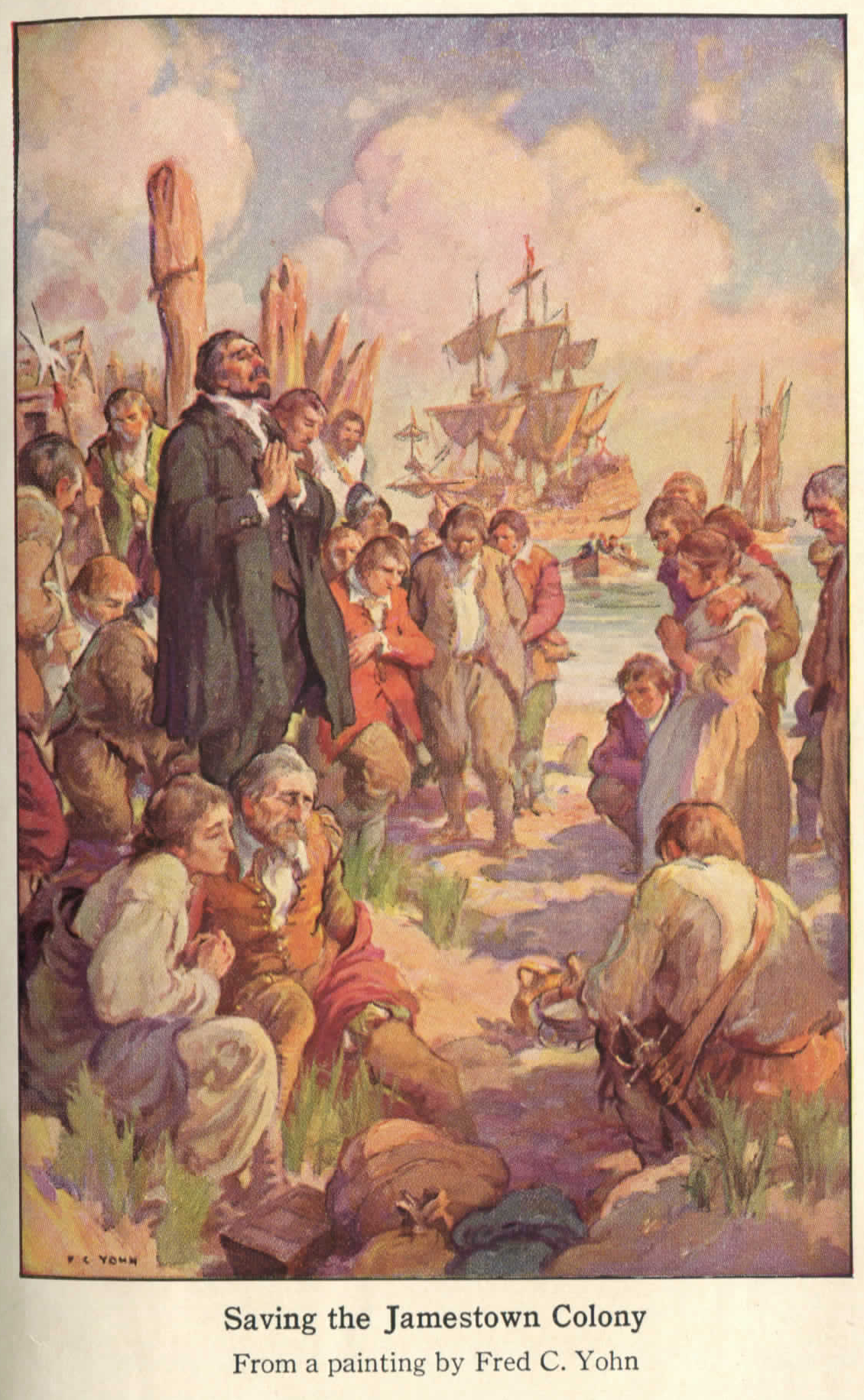
Frederick Coffay Yohn (1875-1933) of Indianapolis specialized in historical scenes. I have shown his artwork before. Click on the label at the right to see more. The two scenes below are from a grade school textbook, The Beginnings of the American People and Nation by Mary G. Kelty (Ginn and Company, 1930). Other artists represented in this book include: Peter Hurd (1904-1984), C. Hoff, M. Zeno Diemer (1867-1939), Stanley M. Arthurs (1877-1950), Ernest Board (1877-1934), C.Y. Turner (1850-1919), Haskell Coffin (1878-1941), H.A. Ogden (1856-1936), Max Bohm (1868-1923), Howard E. Smith (1885-1970), and Rodney Thomson (1878-1941). There are also many nicely--though anonymously--made maps.


Text copyright 2022, 2024 Terence E. Hanley

Wednesday, December 14, 2022

Black Hoosier Cartoonists in Chicago

This year I added a unique and really interesting book to my library. The title is It's Life as I See It: Black Cartoonists in Chicago, 1940-1980. It was compiled and edited by Dan Nadel and includes essays by Charles Johnson and Ronald Wimberly. It's Life as I See It was published in conjunction with an exhibit called "Chicago Comics: 1960s to Now," held at the Museum of Contemporary Art Chicago, June 19 to October 3, 2021. Cartoonists represented in the book are:

  • Richard "Grass" Green (1939-2002)
  • Seitu Hayden (b. 1953)
  • Jay Jackson (1908-1954)
  • Charles Johnson (b. 1948)
  • Yaoundé Olu (b. 1945)
  • Turtel Onli (b. 1952)
  • Jackie Ormes (1911-1985)

Of these nine cartoonists, three are or were from Indiana, Tom Floyd, Grass Green, and Seitu Hayden. I have written about Tom Floyd before, on February 12, 2021. You can read about him by clicking here.

Richard Lee (later Edward) "Grass" Green was born on May 7, 1939, in Fort Wayne, Indiana, to Noah and Retta (Knight) Green, both of whom were from Alabama. Grass Green was active in comic book fandom and in what fans call small press and independent press. One of his most well-known creations is a superhero called Xal-Kor the Human Cat. Green aspired to work for Marvel Comics but made it only as far as Charlton Comics (in the 1960s) and underground comics (in the 1970s). He continued working in the comics field throughout his too-brief life. It's Life as I See It reprints a previously unpublished comic book story called "Smoke Power," from the 1990s. Grass Green died on August 5, 2002, in his native city.

Seitu Hayden was born William Eric Hayden on September 11, 1953, in Fort Wayne. Mr. Hayden worked with Grass Green as early as 1969, inking Green's comic strip "Lost Family." He later took the name "Seitu," which means "artist" in Swahili.

"Smoke Power" by Richard "Grass" Green, an unpublished comic book story from the 1990s. Ironically, Grass Green died of lung cancer at age sixty-three.

Text copyright 2022, 2024 Terence E. Hanley

Sunday, September 25, 2022

Dele Jegede in Encyclopedia of African Political Cartoonists

Born in 1945 in Ikere-Ekiti, Nigeria, artist, teacher, cartoonist, and art historian Dele Jegede studied art history at Indiana University in 1979-1983. From 2002 to 2005, he was a professor of art and head of the Department of Art at Indiana State University in Terre Haute.

For years it was hard to find anything about Dr. Jegede on the Internet, least of all images of his art. That has changed. There is a lengthy Wikipedia page on him. From that I have learned that in 2018, he was inducted into the Society of Nigerian Artists Hall of Fame. There is also an entry on Dele Jegede on the website Africa Cartoons: Encyclopedia of African Political Cartooning. Here is a link to the main page:

https://africacartoons.com/cartoonists/

And here is a link to the page on Dr. Jegede himself:

https://africacartoons.com/cartoonists/map/nigeria/jegede-dele/

Congratulations and best wishes to Dr. Jegede for the recognition he has received.

Copyright 2022, 2024 Terence E. Hanley

Wednesday, February 2, 2022

Evaline Ness (1911-1986)

Evaline Ness was born Evaline Michelow on April 24, 1911, in Union City, Ohio. Her father was Albert Michelow (1867-1932), a Swedish-born brickmason. Her mother was Myrtle W. (Carter) Michelow (1875-1958), a dressmaker born in Virginia. Evaline's parents were married in 1898 in North Carolina. They had four children, Rudolph, Eloise, Josephine, and Evaline, the youngest. Maybe the title character in Evaline's book Josefina February (1963), shown below, was named for her older sister.

The Michelow family lived in North Carolina, Virginia, and Ohio before settling in Pontiac, Michigan, when Evaline was a young child. She graduated from Pontiac Central High School in 1929. In 1930, at age eighteen, she lived with her parents in Pontiac and worked as a librarian at the city public library. In 1931-1932, she studied to be a librarian at Ball State Teachers College, now Ball State University, in Muncie, Indiana, thus her connection to the Hoosier State. While in Muncie, she was also a fashion model. After leaving Ball State, Evaline Michelow studied at the Chicago Art Institute from 1933 to 1935. She worked as a fashion illustrator throughout the 1930s.

Evaline Michelow was married five times and was known by her second husband's surname. Her first marriage was to a man named McAndrews. He seems to have disappeared from the public record. They were divorced sometime in the 1930s. Her second husband was Eliott Ness (1903-1957) of Untouchables fame, whom she met on a train traveling between Chicago and New York. Both were married at the time but got divorced soon enough, he just in time apparently to marry her. (Eliot Ness' divorce came in 1939 in Florida. He and Evaline were married in late October 1939.) The couple lived in Cleveland and Washington, D.C. They divorced in 1945 or 1946 or 1951, but she kept his name. There were three other husbands, last of whom was Arnold A. Bayard (1904-1988), an engineer and wine connoisseur. They had homes in New York and Florida. The two lie together--or at least they have headstones next to each other--at Snow Cemetery in Truro, Massachusetts. As you might guess, Evaline Ness was a free spirit. "I don't need a husband all the time," she said. And though children intrigued her and she wrote and illustrated books about them, she never had any of her own.

Evaline Ness was a fashion illustrator, magazine illustrator, commercial artist, painter, and children's book author and illustrator. Her first illustrations for a children's book were for Story of Ophelia by Mary J. Gibbons (1954). Other books which she illustrated include:

  • The Bridge by Charlton Ogburn (1957)
  • The Sherwood Ring by Elizabeth Marie Pope (1958)
  • Island of the Blue Dolphins by Scott O'Dell (1960)
  • Thistle and Thyme: Tales and Legends from Scotland by Sorche Nic Leodhas (1962)
  • A Gift for Sula Sula by Evaline Ness (1963)
  • Josefina February by Evaline Ness (1963)
  • All in the Morning Early by Sorche Nic Leodhas (1963), a Caldecott Honor Book
  • Exactly Alike by Evaline Ness (1964)
  • Josie and the Snow by Helen E. Buckley (1964)
  • A Pocketful of Cricket by Rebecca Caudill (1964), a Caldecott Honor Book
  • The Princess and the Lion by Elizabeth Coatsworth (1964)
  • A Double Discovery by Evaline Ness (1965)
  • Tom Tit Tot: An English Folk Tale retold by Virginia Haviland (1965), a Caldecott Honor Book
  • Favorite Fairy Tales Told in Italy by Virginia Haviland (1965)
  • Sam, Bangs and Moonshine by Evaline Ness (1966), for which she won a Caldecott Medal
  • Books by Lloyd Alexander, including:
  • The Book of Three (1964)
  • The Black Cauldron (1965)
  • The Castle of Llyr (1965)
  • Coll and His White Pig (1965)
  • Isle of Mona (1966)
  • Taran Wanderer (1967)
  • The Truthful Harp (1967)
  • The High King (1968)
  • Mr. Miacca, an English Folktale by Evaline Ness (1967)
  • The Girl and the Goatherd by Evaline Ness (1970)
  • Some of the Days of Everett Anderson by Lucille Clifton (1971)
  • Everett Anderson's Christmas Coming by Lucille Clifton (1971)
  • Amelia Mixed the Mustard and Other Poems (1975)
  • Four Rooms from the Metropolitan Museum of Art to Cut Out and Color by Evaline Ness (1977)
The list above is by no means complete.

Evaline Ness had an extraordinary run from 1963 to 1966 during which she won three Caldecott Honors and a Caldecott Medal. She is tied for seventh among winners of the most Caldecott awards.

By 1979, when the Palm Beach Post published a profile of her (Apr. 5, 1979), Evaline was tired of illustrating. Her last book was The Hand-Me-Down Doll by Steven Kroll (1983). Evaline Ness died on August 12, 1986, in Kingston, New York. Her remains were cremated and her ashes scattered. The stone at Snow Cemetery may be only for old time's sake.


Evaline Michelow Ness (1911-1986), her high school yearbook photograph, 1929.

Backdated to February 2, 2022.
Text copyright 2022, 2024 Terence E. Hanley

Friday, January 7, 2022

Recent Book on Cartoon Censorship

Today is what I call the International Day of the Cartoonist, meant to honor and remember the cartoonists Wolinski, Cabu, Honoré, Tignous, and Charb, all killed by Islamic terrorists in Paris on this date in 2015. Although Hoosier cartoonists have not faced anything like that, we have had in the past few months an attempt at censorship against one of them, Ken Avidor of Indianapolis. Mr. Avidor's offense against political orthodoxy involves his animated cartoon Unjabbed. Those in power cannot tolerate dissent or difference of opinion, and so Mr. Avidor's cartoon has been censored. The last we heard, Ken Avidor is working on the second episode of Unjabbed.

MIT Press recently published a book on the topic of cartoonists and censorship, Red Lines: Political Cartoons and the Struggle against Censorship. The authors are Cherian George of Hong Kong Baptist University and Sonny Liew, an independent artist based in Singapore. Not surprisingly, there have been attempts to censor or suppress the book, or to categorize it, more or less, as politically unacceptable. See for example "Red Lines' clumsy attempt to decry cartoon censorship ends up defending bigotry" by Caitlin Rosberg on the website The A.V. Club, dated September 7, 2021, here. The point of Caitlin Rosberg's article or review seems to be: "You should not read this book." Or, perhaps: "The authors of this book should be silenced," a curious and ironic conclusion drawn on a book about censorship.

Backdated to January 7, 2022.

Copyright 2022, 2024 Terence E. Hanley